
Blog
Upgrading Injection Molding Machines with IE4 and IE5 High-Efficiency Motors

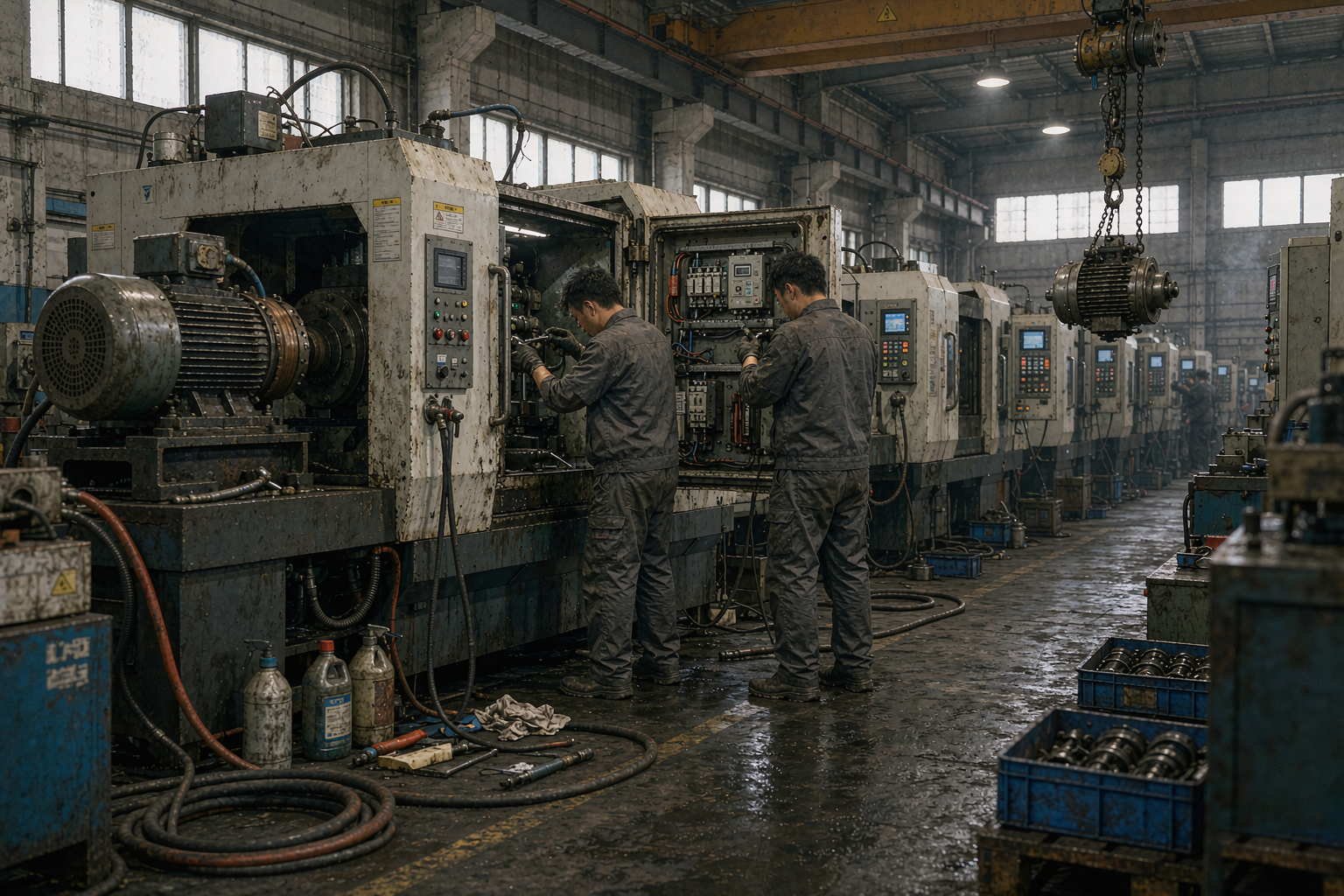
Where an Injection Molding Machine Actually Uses Energy
An injection molding machine is a collection of demanding motion and thermal tasks, and electricity is consumed in several distinct places. The hydraulic pump motor that pressurises the system is usually the largest single load. Screw drive, injection and clamp movement add more, and barrel heaters draw significant power during startup and steady operation. In older machines the pump motor runs at full speed continuously, delivering far more flow than the process needs most of the time. The surplus is throttled across relief valves and converted directly into heat, which then has to be removed by a cooling system that consumes still more energy.
This wasteful pattern is built into many machines that are otherwise mechanically sound. A press that is twenty years old may still produce dimensionally accurate parts, yet its fixed-speed motor and inefficient hydraulics can consume two or three times the energy of a modern equivalent. Replacing the entire machine is expensive and often unnecessary. Upgrading the electric drive is one of the highest-return energy projects available in a plastics plant.
What IE4 and IE5 Motors Change
Motor efficiency classes define how much input electrical energy becomes useful shaft power. IE3 is the premium efficiency level mandated in many markets; IE4 and IE5 represent super-premium and ultra-premium tiers. The difference between an old standard-efficiency motor and an IE4 or IE5 unit can be several percentage points, and because the pump motor in a molding machine runs for thousands of hours a year, that difference compounds into a substantial sum.
IE5 synchronous reluctance and permanent-magnet assisted machines maintain high efficiency across a wide load range, not just at the rated point. This matters in injection molding, where the motor rarely sits at a single steady load. During plasticising, clamping and injection, demand changes constantly. A motor that stays efficient through that profile delivers savings that a nameplate comparison alone will not reveal.
Beyond the Motor: Servo Pump and VFD Drives
Upgrading only the motor captures part of the available saving. The larger gain often comes from changing how the pump is driven. A variable frequency drive adjusts motor speed to match the flow and pressure the machine actually requires at each phase of the cycle. During cooling and hold, when almost no flow is needed, the motor slows dramatically instead of pumping against a relief valve. Servo pump systems go further, using a permanently magnet motor with tight pressure and flow control loops to hold exact set points with minimal energy.
The side benefits are as valuable as the electricity saving. Less throttling means less heat in the hydraulic oil, so oil degradation slows, seal life extends and the cooler works less hard. Noise falls because the motor is not running flat out during every phase. Pressure repeatability improves, which can reduce scrap on tight-tolerance parts. Many plants report that a drive retrofit pays for itself through scrap reduction and maintenance savings before the energy savings are even counted.
Matching the Motor to the Duty Cycle
Injection molding is a cyclic, intermittently loaded application, and selecting a motor requires attention to more than kilowatt rating. Consider the following points before specifying a retrofit.
- Load profile: Map the flow and pressure demand across the whole cycle. Size the drive for the real peak, not a conservative guess, and check that the motor stays efficient at the low-demand phases.
- Torque and acceleration: Screw drive and injection require high breakaway torque and rapid acceleration. Confirm the motor and drive can deliver peak torque without excessive current draw.
- Thermal management: Near the mold and barrel, ambient temperatures are high. Choose an enclosure and cooling arrangement that protects insulation life, and use a motor with a suitable temperature class.
- Compatibility: Check mounting dimensions, shaft height and coupling to the existing pump. A drop-in replacement avoids costly fabrication and shortens downtime.
- Harmonics: Multiple drives on one supply can introduce harmonics. Specify line reactors or active filters where required to protect other equipment and meet site power quality standards.
- Control integration: Ensure the drive communicates cleanly with the machine controller so that pressure and flow set points are followed accurately rather than fought.
Building the Business Case
A retrofit decision should be based on measured numbers, not general promises. Record the machine’s current energy use per part or per hour, then estimate savings from the motor efficiency gain and the reduction in throttling losses. Add the expected scrap reduction, cooler load reduction and maintenance deferral. In most plants the simple payback for a combined motor and variable-speed drive retrofit falls between one and three years, with the shortest returns on machines that run multiple shifts and spend long periods at low demand.
Because downtime is expensive, plan the change carefully. Pre-assemble the motor and drive, verify compatibility with the pump, and schedule installation into a planned maintenance window. Commission with a measured comparison of before-and-after energy draw so the return can be demonstrated to finance and replicated across the rest of the press shop.
A Practical Path Forward
Start with a single representative machine. Instrument it, capture a cycle-by-cycle load profile, and select an IE4 or IE5 motor with a matching variable-speed or servo drive. Verify the result, refine the specification, and then roll the proven package out across the line. This staged approach controls risk and builds an internal evidence base.
High-efficiency motors are one of the clearest opportunities in a plastics plant, but the return depends on choosing a drive that suits the real duty cycle. To discuss an injection molding motor upgrade, request a load assessment, or compare IE4 and IE5 options for your presses, visit https://motorolltech.com and speak with our engineering team.