
Blog
Compressor Duty Motors: IE3 vs IE4 vs IE5 Motor Efficiency in Continuous Operation

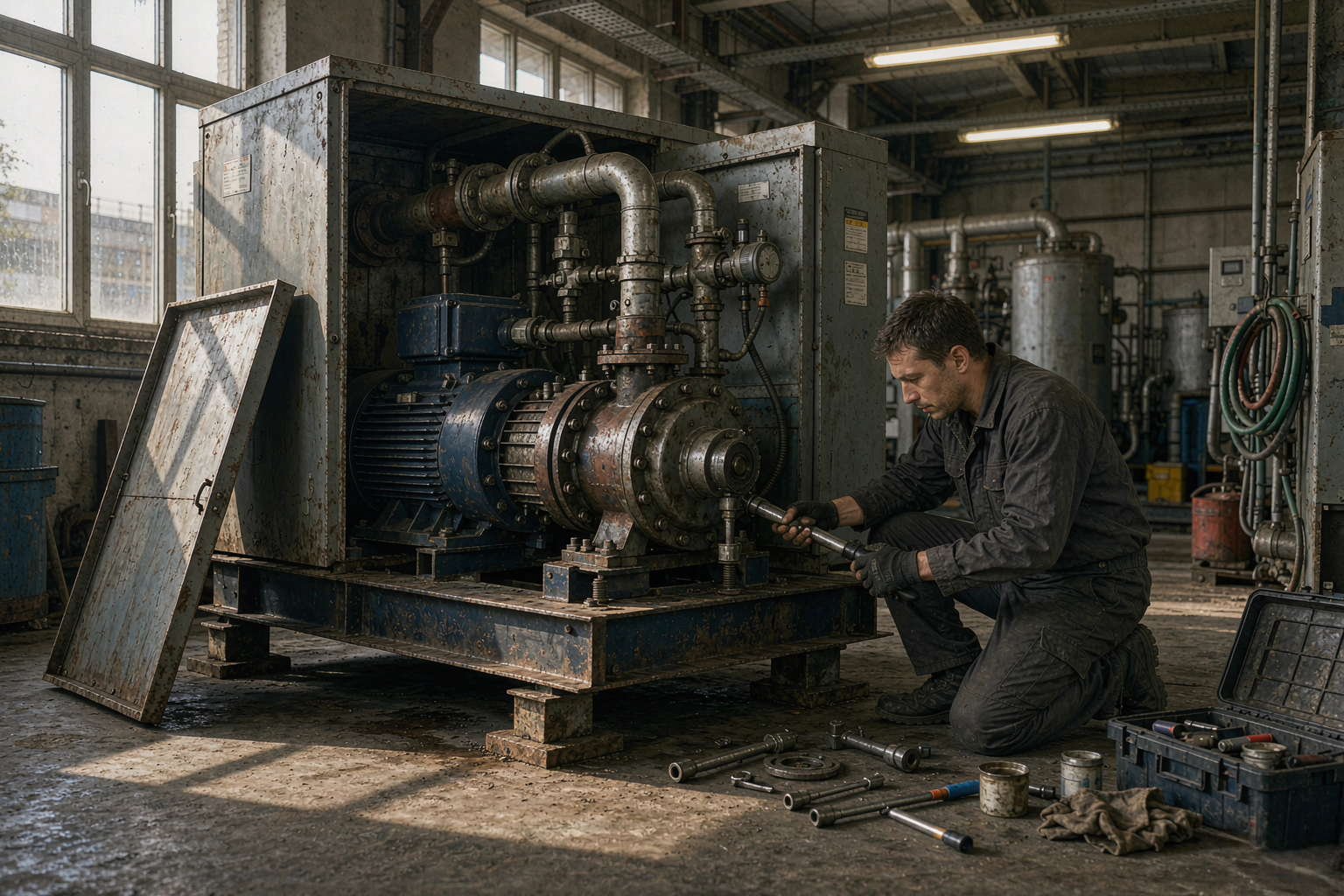
Air compressors occupy a special place in plant energy accounting. They run for thousands of hours a year, often around the clock, and in many facilities the compressed air system is the single largest consumer of electricity after the production process itself. Because the motor inside a compressor converts that electricity directly into heat and compressed air, the efficiency class of that motor matters more than almost any other component choice in the package. This article examines what moving from IE3 to IE4 or IE5 means specifically for compressor duty, where the losses go, and how to evaluate the upgrade against your own operating profile.
Why Compressor Duty Amplifies Motor Efficiency
Most industrial motors spend part of their lives idle, throttled, or lightly loaded. A compressor motor rarely enjoys that mercy. Lubricated and oil-free screw compressors are designed for continuous operation, and their motors accumulate 6,000 to 8,000 running hours per year as a baseline, with many installations running 24/7. Every watt lost inside the motor is wasted twice over: it never becomes compressed air, and it adds heat that the compressor’s cooling system must then remove, sometimes consuming additional fan energy in enclosed machine rooms.
This is why the efficiency tier of the main drive motor is not a footnote in a compressor datasheet. On a 75 kW machine running 7,000 hours a year, the difference between efficiency classes translates into thousands of kilowatt-hours annually, and across a compressor fleet the numbers justify boardroom attention.
IE3 vs IE4 vs IE5 Motor Efficiency: The Loss Logic Behind the Tiers
Under the international standard IEC 60034-30-1, efficiency classes are defined by losses rather than by a single efficiency figure. Each higher tier requires roughly a 15 to 20 percent reduction in motor losses compared with the tier below, and the IE5 tier targets approximately 20 percent lower losses than IE4. The labels map directly onto marketing names: IE3 is Premium efficiency, IE4 is Super Premium, and IE5 is Ultra Premium, the level typically reached today with synchronous reluctance (SynRM) or permanent magnet (PM) rotor designs rather than conventional three-phase induction technology.
When engineers compare IE3 vs IE4 vs IE5 motor efficiency for compressor duty, the loss logic matters more than the headline percentages. Induction motors lose energy through stator copper losses, rotor copper losses, iron losses, friction, and windage. SynRM designs eliminate rotor copper losses entirely, and PM designs go further by removing the magnetizing current that an induction motor draws continuously. For a compressor that starts and stops frequently or operates with unloading cycles, that reduced idle consumption compounds the full-load savings, because the motor spends more of its life near the efficient part of its curve.
Full Load, Part Load, and How Compressors Actually Run
Nameplate efficiency ratings describe full-load, rated-speed performance at nominal voltage and temperature. Real compressors live elsewhere. Screw compressor packages modulate between full load and unloaded running, and oil-free machines in particular cycle with demand, spending meaningful fractions of their annual hours below full load. At part load, the efficiency gap between IE3 induction motors and IE4 or IE5 SynRM or PM machines typically widens, because the induction motor’s magnetizing losses persist while its useful output falls.
For buyers, this means the honest comparison is not nameplate versus nameplate but annual energy consumption versus annual energy consumption, at your actual pressure band and demand profile. A compressor packaged with an IE5 SynRM motor and a variable speed drive will usually show its largest advantage in plants with fluctuating demand, where the drive keeps the motor near its optimum speed and the rotor design keeps idle losses low. In plants with steady, high demand near full load, the gap narrows but remains real, because full-load losses are still roughly 20 percent lower per tier.
Retrofit or Replace: Evaluating the Upgrade Path
Plants with installed IE3 compressor fleets face a choice between upgrading the whole package at replacement time and retrofitting motors in place. A few practical distinctions guide the decision. In most modern oil-free packages, the motor, drive, and compressor element are engineered together, with cooling, bearings, and control integrated; separating them for a motor swap can void warranties and disturb the machine’s thermal balance. Retrofit projects therefore suit older packages where the motor is a standard separate component, or installations where the entire compressor is at end of life anyway.
The cleanest evaluation compares three options at your real duty point: keep the IE3 machine, buy a new package with an IE4 or IE5 motor, and buy the highest-efficiency package available with a variable speed drive. Include electricity at your actual tariff, expected annual hours, maintenance differences, and any available efficiency incentives. In most cases with more than about 4,000 annual hours, the higher-tier option pays back within the compressor’s service life, and in 24/7 operations the payback often arrives quickly enough that waiting for end of life is the expensive choice.
Beyond the Motor: Compressor System Factors
Motor efficiency tiers deliver their full value only when the surrounding system is sound. Pressure band deserves first attention: every bar of unnecessary system pressure increases compressor power consumption measurably, and many plants run two or more bars higher than their processes require. Leaks come next, since a compressed air system with a double-digit leak rate wastes a portion of every efficiency gain. Downstream, dryers and filters impose pressure drop that the compressor must pay for, and their sizing should be reviewed whenever the compressor package is upgraded. Finally, storage and control strategy, adequate receiver capacity plus intelligent multi-unit sequencing, reduces unloaded running and starts, which is exactly the regime where high-efficiency rotor designs and drives show their advantage.
Facilities that combine an IE4 or IE5 compressor package with pressure optimization, leak repair, and sensible storage routinely report compressed air energy reductions far larger than the motor tier change alone would suggest. The motor upgrade is the anchor; the system work collects the rest.
A Short Checklist for the Next Compressor Purchase
Buyers can compress this article into a handful of questions for the next tender. What is the motor’s IE class under IEC 60034-30-1, and is the figure measured at the compressor’s real operating point? Is the drive variable speed, and how does the package perform at 40 to 70 percent load, where the plant actually lives? What is the guaranteed package-specific power, in kilowatts per unit of delivered air, rather than motor-only efficiency? And how do SynRM or PM rotor designs affect maintenance intervals and spare parts availability over a ten-year horizon? Suppliers confident in their engineering answer these questions with data, and the answers separate genuinely efficient packages from marketing brochures.
Compressor duty rewards efficiency investment like few other applications: continuous hours, compounded heat penalties, and a system where every saved watt is saved thousands of times per year. Choosing the higher efficiency tier is usually the decision that keeps paying longest.
For detailed comparisons of IE3 vs IE4 vs IE5 motor efficiency in compressor and continuous-duty applications, visit https://motorolltech.com. Our application guides cover SynRM and IE5 motor technology, drive pairing, and payback evaluation for compressor fleets of every size.