
Blog
Winding Temperature Monitoring: The Silent Guardian of Motor Life

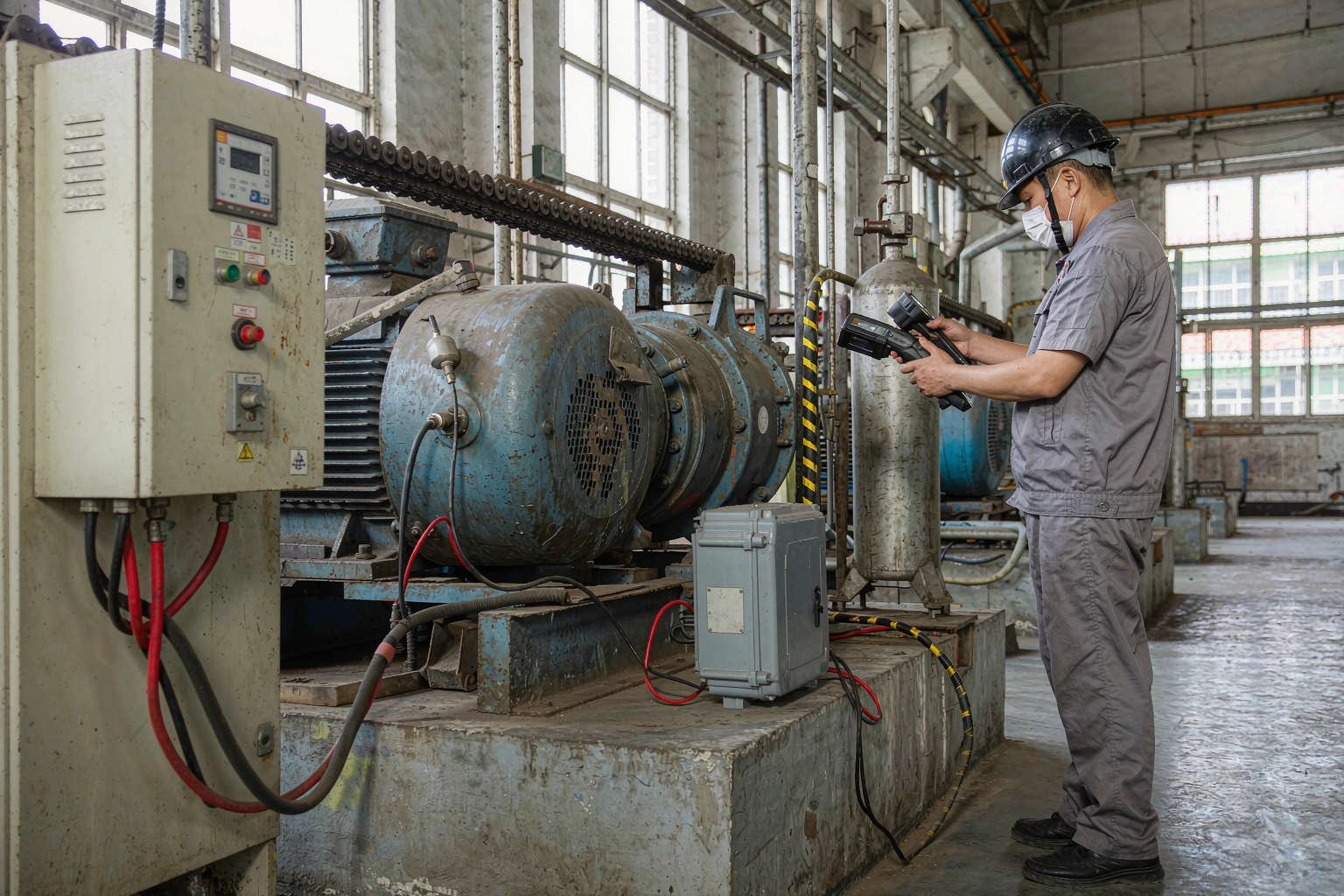
Heat Is the Silent Killer of Electric Motors
Ask a maintenance engineer what causes most motor failures and the answer is rarely a broken shaft or a snapped belt. It is heat. Insulation is the weakest component in any electric motor, and its life is governed by a simple but unforgiving rule: for every 10 degrees Celsius that a winding runs above its rated temperature, the expected insulation life is roughly halved. A motor that is electrically healthy but thermally abused can fail in a fraction of its design life, often without any warning until the winding shorts to ground and the production line stops.
This is why temperature monitoring is one of the most valuable protective measures available, yet it remains one of the most inconsistently applied. Overcurrent relays and fuses protect against gross electrical faults, but they are poor guardians against the slow, cumulative damage of overheating caused by sustained overload, blocked ventilation, high ambient temperature, or frequent starting. To catch those conditions, you need to know what the winding is actually doing.
Measuring Winding Temperature: The Options
There are several ways to monitor motor temperature, and choosing the right one depends on the motor size, the criticality of the application, and the environment.
- Resistance temperature detectors (RTDs / PT100): A PT100 sensor is embedded in the winding during manufacture and changes resistance predictably with temperature. RTDs provide an accurate, absolute temperature reading that can be displayed, logged, and used for trending. They are the preferred choice for large or critical motors and are commonly specified on IE3, IE4, and IE5 machines in demanding duty.
- Positive temperature coefficient thermistors (PTC): These small sensors are placed in the windings and switch sharply at a defined threshold temperature. Rather than giving a continuous reading, a PTC acts as a reliable trip signal. They are inexpensive, robust, and widely used for motor thermal protection, especially in smaller machines where a full RTD system would be unnecessary.
- Thermocouples: Less common in standard motors but useful in some high-temperature or special applications.
- Calculated or estimated temperature: Modern motor protection relays and variable frequency drives can estimate winding temperature from current, speed, and a thermal model of the motor. This approach requires no extra wiring and works well as a baseline, but it cannot detect problems such as a blocked cooling fan or a blocked air filter that are not reflected in the current draw.
Where Sensors Should Be Placed
The location of a temperature sensor matters as much as its type. The winding end-turns are usually the hottest part of a motor, so sensors are embedded there during the winding process. For larger machines, three sensors—one per phase—are often installed so that an imbalance or a phase-specific problem can be detected. Bearings are another critical monitored point: bearing temperature sensors can reveal lubrication failure, misalignment, or impending bearing damage long before vibration becomes severe.
It is worth noting that stator winding temperature and bearing temperature tell different stories. A rising winding temperature usually points to electrical or cooling problems—overload, high ambient, reduced airflow. A rising bearing temperature points to mechanical problems—lubrication, alignment, or load. Monitoring both gives a much more complete picture of motor health than either alone, and this is why condition monitoring programmes on critical assets increasingly combine temperature with vibration and current analysis.
Connecting Temperature Signals to Protection and Control
A temperature sensor is only useful if its signal drives an action. In a well-designed system, the signal is wired to a motor protection relay or to the drive, which can be configured with multiple thresholds. A first-level alarm alerts operators that temperature is trending upward, giving them time to investigate before a trip occurs. A second, higher threshold triggers a controlled shutdown to prevent damage. Some systems go further and automatically reduce load or speed when temperature approaches the limit, keeping the process running while protecting the machine.
For motors controlled by variable frequency drives, the drive can use the temperature input to adjust its thermal model, improving the accuracy of protection during low-speed operation when the shaft-mounted cooling fan is less effective. This integration is particularly valuable on constant torque applications where the motor may deliver high torque at low speed—exactly the condition in which overheating risk is greatest.
Temperature as Part of a Broader Protection Strategy
No single protective measure is sufficient on its own. Temperature monitoring should be seen as one layer in a strategy that also includes correct motor sizing, appropriate insulation class, proper ventilation, clean cooling surfaces, and regular mechanical inspection. Insulation class is worth a closer look: a motor built with Class F or Class H insulation can tolerate higher winding temperatures than a Class B motor of the same power, giving it more thermal headroom. Specifying a higher insulation class is often a low-cost way to improve reliability in hot or demanding environments.
Environment also plays a decisive role. High ambient temperature, operation at altitude, enclosed or poorly ventilated locations, and frequent starts all reduce a motor’s ability to shed heat. In these conditions, a motor that runs comfortably on a test bench can run hot in service. Temperature monitoring is what turns that hidden risk into a visible, manageable parameter, and it is why engineers working in steel mills, foundries, chemical plants, and tropical climates routinely specify embedded temperature sensors as standard.
From Reactive Repairs to Predictive Maintenance
The greatest value of temperature monitoring is not that it trips a motor before it burns out—it is that it reveals a developing problem while there is still time to act. A gradual rise in winding temperature over several weeks may indicate a clogged cooling passage or a deteriorating filter. A sudden jump may signal a failing cooling fan or the onset of a turn-to-turn fault. Captured in a historian or condition monitoring system, these trends become early warnings that let maintenance teams schedule intervention during a planned outage rather than react to a midnight failure.
For facilities pursuing predictive maintenance, motor temperature is one of the most accessible and informative signals available. Combined with vibration and current signatures, it forms a powerful picture of machine health that reduces unplanned downtime and extends asset life. Whether you are protecting a single critical pump or an entire production line, embedding the right temperature sensing—PT100 RTDs for accurate trending, PTC thermistors for dependable tripping—is a small investment that pays for itself the first time it prevents a burnout.
To discuss motor protection options, temperature sensing packages, or high-efficiency motors built for demanding duty, contact our engineering team at https://motorolltech.com.