
Blog
Matching Motors and Gearboxes: A Practical Guide to Gear Motor Selection

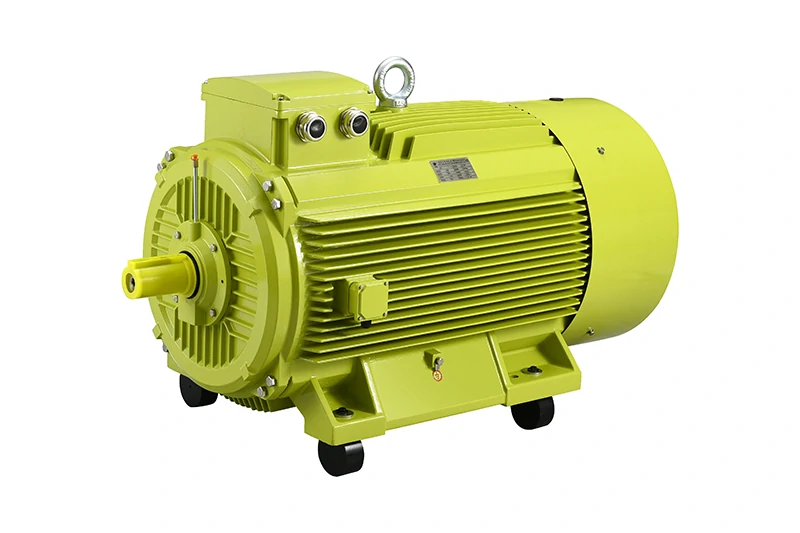
Selecting an electric motor in isolation is a common and expensive mistake. In most industrial machines — conveyors, mixers, hoists, extruders, and agitators — the motor does not drive the load directly. It drives it through a gearbox that trades speed for torque. If the motor and gearbox are not matched as a system, the result is predictable: a motor that overheats, a gearbox that fails prematurely, or a machine that simply cannot deliver the required output. A careful gear-motor selection process, built around torque, speed ratio, and service factors, avoids all three outcomes.
Start with the Load, Not the Motor
The selection process always begins at the driven machine. You need to know three things about the load: the speed at which it must run, the torque it requires at that speed, and the nature of the load itself. Torque is the rotational force needed to turn the load, and it is what ultimately determines motor and gearbox size. For a conveyor, torque depends on the total moving mass, friction, incline, and acceleration requirements. For a mixer or agitator, it depends on the fluid viscosity, vessel geometry, and impeller design.
Equally important is the load’s torque profile. A constant-torque load, such as a conveyor or hoist, demands roughly the same torque across the speed range. A variable-torque load, such as a fan or centrifugal pump, needs far less torque at low speed. Knowing which category your application falls into determines not only motor size but also the type of speed control that will work efficiently. Skipping this analysis and simply copying the motor size from a similar machine is how oversized, inefficient, and unreliable installations get built.
Calculating Speed Ratio and Output Speed
Standard induction motors run at a nominal synchronous speed determined by the supply frequency and the number of pole pairs — for example, about 1,500 rpm for a four-pole motor on a 50 Hz supply, slightly less under load (the famous “slip”). Gearboxes reduce that speed to what the machine needs. The reduction ratio is simply input speed divided by output speed. If a motor runs at 1,450 rpm and the conveyor must turn at 145 rpm, you need a 10:1 reduction.
Now, be aware that ratio is not free. Every reduction stage introduces mechanical losses, typically a few percent per stage for well-designed helical or planetary gearing, and more for worm gears. That means the motor must produce slightly more power than the ideal calculation suggests. Worm gearboxes, while compact and capable of high single-stage ratios, are notably less efficient and generate more heat, so they deserve particular scrutiny in continuous-duty applications.
Choosing the Right Gearbox Type
Different gearbox technologies suit different jobs. Helical gearboxes are efficient, quiet, and durable, and are a strong general-purpose choice for conveyors and most industrial drives. Bevel-helical units handle right-angle drives and higher torques. Planetary gearboxes deliver very high torque density and precision in a compact package, ideal for servo-driven and space-constrained applications. Worm gearboxes offer high reduction ratios and self-locking behaviour at low cost, but with lower efficiency and greater heat — acceptable for intermittent duty, less so for continuous operation.
When you choose a gearbox, pay attention to its rated output torque and its allowed input speed, as well as the mounting arrangement and shaft configuration. A gearbox that is marginally rated for the load will run hot and wear quickly, while one that is dramatically oversized wastes money and space. Aim for a sensible margin rather than a large one.
Service Factors and Real-World Conditions
This is where many selections go wrong. The theoretical torque calculated from the load is only the starting point. Real machines experience shock loads, starts and stops, reversals, and variations in material feed. To account for this, engineers apply a service factor — a multiplier that builds in a safety margin. A gentle, steady conveyor might use a service factor of 1.25, while a crusher, hoist, or mixer with frequent starting under load may need 1.75 or higher. Duty cycle matters too: a machine that runs 24 hours a day needs a more conservative factor than one that runs a few hours a shift.
Ambient conditions belong in this calculation as well. High ambient temperature, poor ventilation, dusty environments, and altitude all reduce the effective cooling of both motor and gearbox. A motor rated for a mild climate may run hot in a foundry or a sealed outdoor enclosure. In such cases, you may need a larger frame, forced ventilation, or a higher temperature insulation class. Ignoring these derating factors is a frequent cause of motors that trip on overload during the hottest part of the year.
Efficiency and the Case for Variable Speed
Once the mechanical match is settled, efficiency deserves attention. High-efficiency IE3 or IE4 motors reduce energy cost over the machine’s life, and the payback is often short in continuously running applications. Where the load varies — conveyors with changing throughput, mixers with changing batch conditions — adding a variable frequency drive can deliver substantial savings. A VFD lets you match motor speed to actual demand rather than running flat out and throttling the output mechanically.
Note, though, that running an induction motor at low speed with a VFD reduces its self-cooling, because the shaft-mounted fan slows down. For constant-torque loads at low speed, a separately powered cooling fan or an inverter-duty motor is often required. Also check the gearbox lubrication: some worm and helical units need specific attention when operated at very low speeds or continuously at high input speed.
A Practical Selection Checklist
- Define the load: required output speed, torque, and duty cycle.
- Identify the torque profile — constant or variable — and the starting conditions.
- Calculate the reduction ratio from motor speed to output speed.
- Choose a gearbox type that fits the torque, layout, and efficiency needs.
- Apply a realistic service factor for shock loads and operating hours.
- Account for ambient temperature, ventilation, and altitude derating.
- Select an IE3 or IE4 motor, and add a VFD where speed control saves energy.
- Verify lubrication, cooling, and mounting details before ordering.
Getting the Match Right
A correctly matched motor and gearbox runs cool, delivers the required output, and lasts for years with minimal attention. A poorly matched pair fails early, wastes energy, and disrupts production. The difference is rarely the quality of the individual components — it is whether they were selected together, with a clear understanding of the load and the operating environment. Taking the time to work through torque, ratio, service factor, and conditions at the design stage is the cheapest reliability improvement available.
If you need help sizing a motor and gearbox for a conveyor, mixer, hoist, or other driven machine, the engineers at https://motorolltech.com can review your application and recommend a matched, efficient drive solution. Contact us to discuss your torque, speed, and duty requirements.