
Blog
Where IE4 and IE5 Motors Pay Back Fastest in Cement and Aggregate Plants

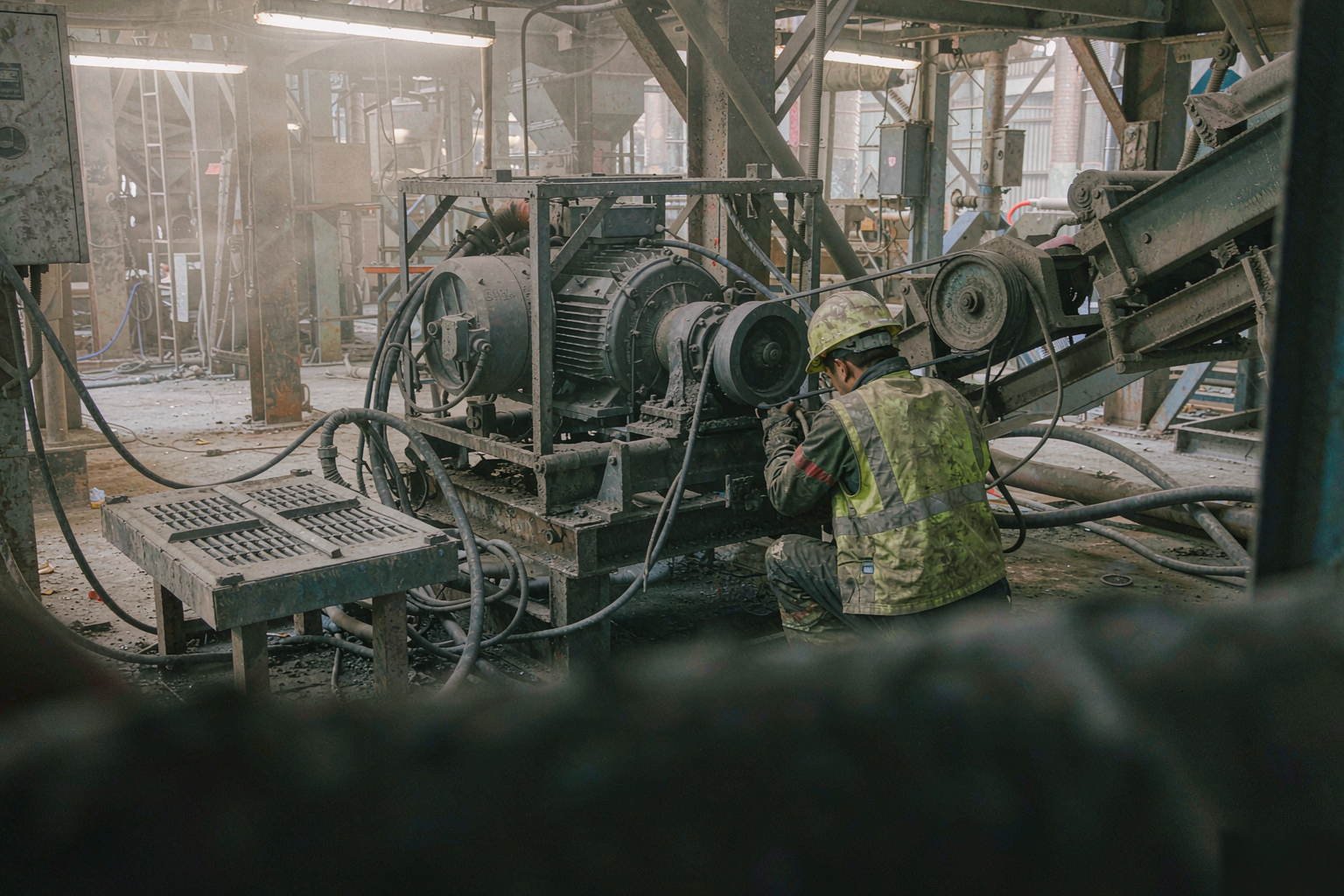
Cement and aggregate plants are among the most energy-intensive industrial operations in the world. Grinding, crushing, conveying, and dust collection all depend on electric motors, and those motors run for long hours in punishing conditions. For plant managers looking to reduce operating cost without disrupting production, upgrading aging motors to premium-efficiency IE4 or IE5 models is one of the most reliable measures available. The key is knowing where the fastest payback lies.
Where motors consume energy in a cement plant
A modern cement plant can have hundreds of electric motors. The largest loads are found on raw mills and cement mills, kiln fans, and large compressor stations, but significant energy is also consumed by conveyors, elevators, crushers, and dust collectors distributed across the site. Because many of these machines run continuously — often 7,000 to 8,000 hours per year — a small efficiency improvement on a single large motor translates into substantial annual savings.
Older motors, particularly those installed before the widespread adoption of IE2 and IE3 standards, can be several percentage points less efficient than a modern IE4 or IE5 equivalent. On a motor running 8,000 hours a year, a two- or three-point efficiency gain can save tens of thousands of kilowatt-hours annually. Multiply that across the plant’s largest drives and the cumulative effect becomes a major line item.
Why payback differs from motor to motor
Not every motor upgrade makes financial sense on the same timeline. Payback depends on four variables: the motor’s power rating, its annual operating hours, the load factor at which it runs, and the local electricity price. A 200 kW kiln fan that runs 8,000 hours per year at high load will repay an efficiency premium far faster than a 7.5 kW conveyor motor that runs 2,000 hours per year. This is why a plant-wide “replace everything” approach is rarely optimal.
The most attractive candidates share a profile: high power, high utilization, and steady load. In a cement plant that typically means mill drives, main fans, and large pumps. These are also the machines where reliability matters most, so specifying a premium motor with robust construction delivers a second benefit — fewer unplanned stops.
Load factor and the part-load reality
Motors are most efficient near their rated load, and many plant motors are oversized, running at 40–60% load for much of their life. A grossly oversized premium motor can actually operate less efficiently than a correctly sized standard motor. Before specifying a replacement, measure the actual load. Power logging over a representative production period reveals whether a motor is oversized and whether a smaller, high-efficiency model would serve better.
Where load varies — as it does on crushers and conveyors that respond to feed rate — pairing a right-sized IE4 or IE5 motor with a variable frequency drive can produce even larger savings. Slowing a fan or pump to meet a reduced demand cuts power roughly with the cube of speed, an effect far greater than any improvement in motor design alone. In dust collection systems, for example, VSD control that adjusts fan speed to the actual dust load can deliver dramatic energy savings while maintaining capture velocity at the hood.
IE4 and IE5 in a harsh environment
Cement and aggregate plants are hard on equipment. Airborne dust is abrasive, ambient temperatures can be high near the kiln, and vibration is a constant companion on crushers and screens. Efficiency gains are worthless if the motor fails prematurely. When selecting an IE4 or IE5 motor for this service, enclosure and protection must be chosen as carefully as the efficiency class.
TEFC (totally enclosed fan-cooled) enclosures with effective shaft seals are a common choice for dusty areas, and higher ingress-protection ratings should be specified where washdown or heavy dust accumulation occurs. Bearing protection is critical: sealed or re-greasable bearings suited to the duty cycle reduce one of the most common failure modes. For applications with high ambient temperatures, verify that the chosen efficiency class does not come with a reduced service factor, and confirm the insulation class and temperature rise.
Premium-efficiency synchronous reluctance (SynRM) and permanent-magnet IE5 motors deserve particular attention in cement service. They achieve very high efficiency across a wide load range and run cooler than conventional induction designs, which extends insulation and bearing life. Their compact, robust rotors have no bars or windings to fail, an advantage in high-vibration locations. The higher purchase price is often justified by both energy savings and improved reliability.
Building a defensible upgrade plan
A structured approach turns a collection of motor replacements into a measurable energy program. Start with an inventory: list each motor’s power, speed, operating hours, load factor, and efficiency class. Rank by estimated energy savings using local tariff data. Verify the operating conditions — dust, temperature, vibration, and starting duty — for the top candidates. Then specify replacements that match the mechanical interface, including shaft height, mounting, and coupling, to avoid costly modifications.
Track results after commissioning. Meter the new motor’s consumption under comparable conditions and compare it with the baseline. Documenting actual savings strengthens the case for the next phase and helps justify further investment. In many plants, the first wave of upgrades on the largest drives funds much of the second wave.
Take the next step
In cement and aggregate production, motor efficiency is not an abstract specification — it is a direct lever on operating cost and reliability. By focusing on high-power, high-utilization drives, matching efficiency class to the real load profile, and choosing enclosures built for the environment, plant operators can capture fast, durable payback. To review motor upgrade opportunities in your facility, including IE4, IE5, and SynRM solutions, visit https://motorolltech.com and consult an application engineer.