
Blog
Motor Insulation Classes Explained: What Class F and Class H Really Mean for Service Life

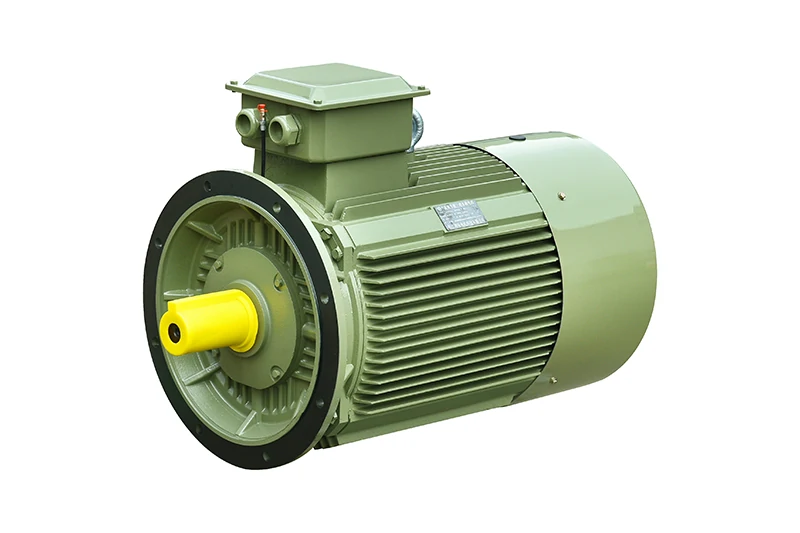
The Nameplate Line Most Buyers Skip
On every industrial motor nameplate, between the voltage and the service factor, sits a small designation like “Class F” or “Class H.” It refers to the thermal insulation system inside the machine — the materials that separate energized windings from the steel core and from each other. It is one of the most consequential specifications on the plate, because the insulation system is what ultimately decides how long the motor survives, and yet in procurement discussions it is routinely treated as an afterthought. Understanding what the class letters mean, and how they interact with ambient temperature, duty cycle, and cooling conditions, is one of the fastest ways to separate a motor that lasts fifteen years from one that fails in three.
What the Insulation Classes Actually Specify
Insulation classes are defined by the maximum total temperature the insulation system can withstand continuously while delivering its rated service life. The standard classes most common in industrial motors are:
- Class A: total temperature limit of 105 °C — rare in modern industrial machines.
- Class B: limit of 130 °C — common in small motors and component-level windings.
- Class F: limit of 155 °C — the workhorse class for most industrial motors today.
- Class H: limit of 180 °C — used in high-ambient, high-temperature, or compact machines where thermal margins are stretched.
These limits combine the ambient temperature, the temperature rise caused by losses inside the machine, and a margin for hot spots inside the winding that external measurement cannot see. A Class F system in a 40 °C ambient is therefore allowed a certain rise, a hotspot margin of roughly 10 K, and nothing left over. If the ambient climbs above 40 °C or the cooling airflow degrades, the machine is operating into its thermal reserve, and its expected life is being spent faster.
The Rule That Makes Temperature the Dominant Variable
The reason insulation class matters so much is that organic insulation materials age thermally according to an exponential relationship, often summarized in industry practice as the “10-degree rule”: for every 10 °C that a winding continuously operates above its design temperature, the thermal life of the insulation roughly halves. Conversely, running consistently cooler than the design point extends life substantially. A motor that spends its whole life 15 °C hotter than intended does not lose fifteen percent of its life — it loses the majority of it.
This is why two motors of identical electrical rating can have dramatically different field histories. The one installed in a hot, poorly ventilated corner with a blocked cooling fan ages on an accelerated clock, while its twin in a cool, clean environment barely breaks a sweat. The nameplate told the truth in both cases; the environment differed.
Reading Nameplates Like an Engineer: Rise Versus Class
Sophisticated buyers look for a subtler specification than the insulation class alone: the temperature rise class the motor is designed to achieve in rated service. Many quality industrial motors are specified as “Class F insulation with Class B temperature rise” — meaning the machine is built with Class F materials but engineered so that, at rated load in rated ambient, the winding only rises to Class B levels. The difference between those two limits, typically 25 K, is the motor’s thermal reserve: headroom that protects the machine against real-world conditions like elevated ambient, voltage imbalance, slightly overloaded duty, or dusty cooling surfaces.
A motor specified as simply “Class F” with a rise allowed right up to the Class F limit has spent its entire thermal budget on the nameplate rating, and any real-world imperfection digs directly into insulation life. When comparing quotations, this single line — insulation class versus rise class — often explains a price difference between machines that look identical on a data sheet. The cheaper motor may genuinely be a Class F machine, just one with no reserve.
Special Conditions That Change the Answer
Several common situations shift the insulation decision:
- High ambient environments. Foundries, boiler houses, desert installations, and enclosed rooms with heat-producing equipment should default to Class H insulation, which buys 25 °C of additional material capability and makes the thermal reserve calculation work out even in hostile conditions.
- Inverter duty operation. VFD-supplied motors experience additional heating from harmonic losses and low-speed cooling degradation, and their windings face steep voltage spikes. Inverter duty motors pair enhanced insulation systems with phase insulation and corona-resistant wire enamels; specifying insulation class without inverter duty qualification on a VFD application is a classic procurement error.
- Frequent starting or high-inertia loads. Every start drives a surge of current through the winding and heats it rapidly from within. Motors on duty cycles with many starts per hour benefit from upgraded insulation even when continuous temperature seems modest.
- Dirty or conductive dust environments. Conductive dust that settles into windings can create tracking paths between turns. Tighter insulation systems, better encapsulation, and sealed winding impregnation matter alongside the class rating.
Practical Selection Guidance
For most general industrial applications in temperate climates, Class F insulation with Class B rise is the sensible standard specification: proven, economical, and carrying a real thermal reserve. Step up to full Class H when the ambient is genuinely hot, the machine is compact and densely rated, the duty involves frequent starts, or the site’s electrical supply is imperfect in ways that push currents upward. In all cases, verify that the manufacturer’s temperature rise figure is declared at rated service, and insist on motors whose winding temperature protection (thermistors or PT100 sensors) matches the insulation class so that a genuinely abnormal condition trips the machine before the insulation ages irreversibly.
It is also worth remembering that insulation class is a materials property, not a performance promise. The promise is delivered by the whole thermal design: cooling airflow, heat transfer from copper to frame, and the quality of the impregnation that bonds the winding together. Buying from manufacturers who test and declare rise data — rather than merely stamping a class letter — is the quiet differentiator between motors that meet their rated life and motors that exceed it.
Insulation is the motor’s biological clock. Specify it with the same care applied to power rating and efficiency class, and the machine will reward the attention with decades of service instead of a handful of years.
Need help specifying motor insulation for a demanding environment? Compare IE3–IE5 motor options and get application engineering support at https://motorolltech.com.