
Blog
IE3 vs IE4 vs IE5 Motor Efficiency at Part Load: What the Nameplate Does Not Tell You

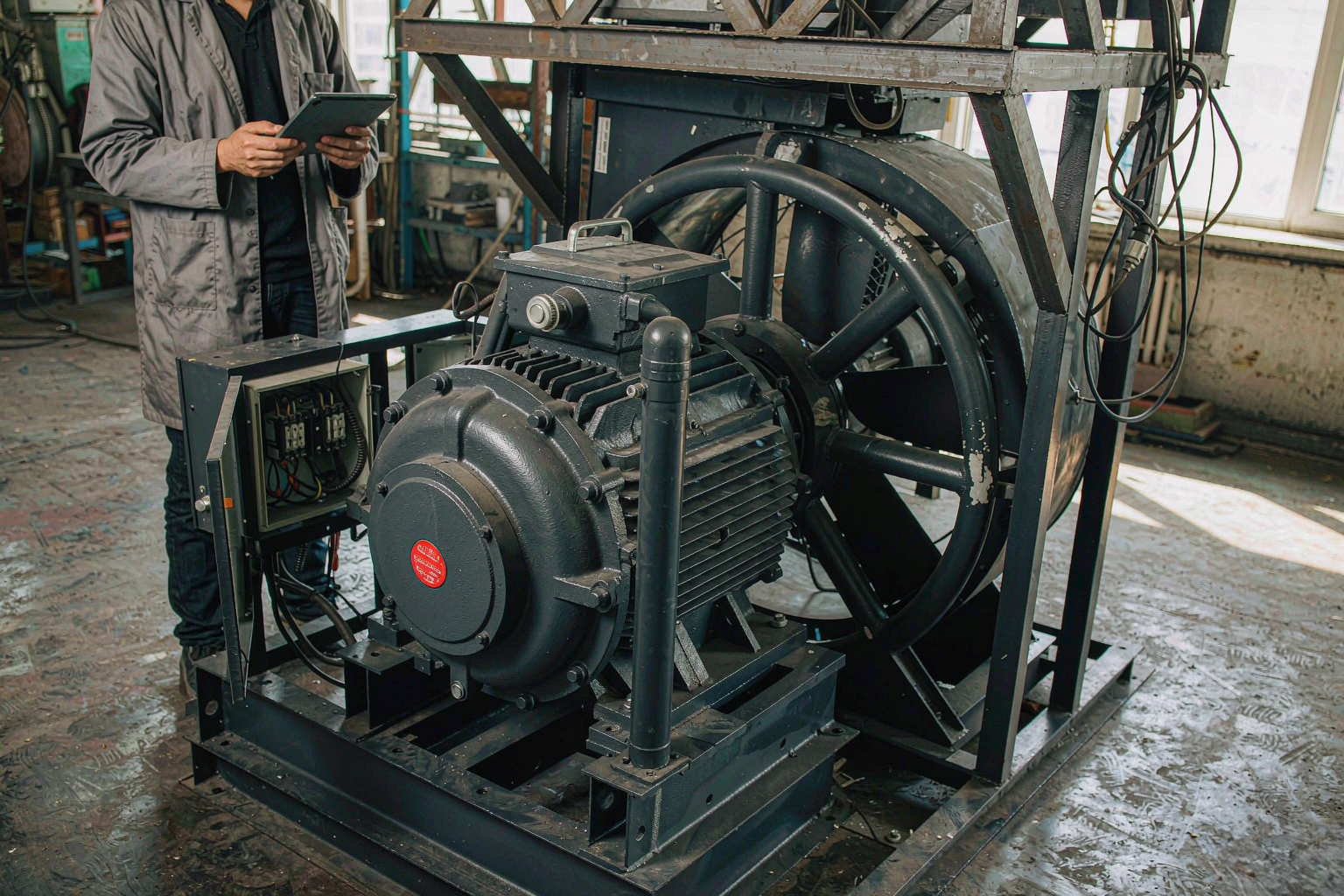
Why the Nameplate Is Only a Full-Load Snapshot
When buyers compare IE3 vs IE4 vs IE5 motor efficiency, the conversation usually starts — and too often ends — with the efficiency figure printed on the nameplate. That number is real and it is useful, but it describes one operating point: rated voltage, rated frequency, rated load, and a stable temperature. Very few industrial motors spend their working lives at that point. Pumps throttle, fans follow a demand signal, conveyors carry variable product, and a variable frequency drive may spend most of the day well below base speed.
This gap between the test point and the real duty cycle is where most purchasing mistakes happen. A motor chosen purely on a nameplate figure can deliver disappointing savings in a plant that runs lightly loaded for two thirds of its shift, while a slightly different choice in the same efficiency class could have performed much better. Understanding how losses behave away from full load is the practical skill that turns an efficiency class into a real reduction in the electricity bill.
IE3 vs IE4 vs IE5 Motor Efficiency: What IEC 60034-30-1 Actually Defines
Before discussing part load, it is worth being precise about what the classes mean. IEC 60034-30-1 defines the IE efficiency tiers for line-operated motors by reference to losses, not by a fixed efficiency table for every rating and pole count. IE3 is labelled Premium, IE4 Super Premium, and IE5 Ultra Premium. Each step up the ladder is intended to cut motor losses relative to the tier below, and the standard sets out limit curves across power ratings and pole numbers.
IE5 is most often reached with synchronous reluctance or permanent magnet technology rather than a conventional induction design. That matters for part-load behaviour, because the loss mix in those machines is different: rotor losses are much lower, while the drive and its control strategy become part of the efficiency story. Two motors carrying the same IE label can therefore behave noticeably differently at 40% load.
Four Loss Groups, Four Different Behaviours
A motor’s losses do not all scale with load in the same way. Roughly speaking, they fall into four groups, and their balance changes as the shaft load drops.
- Stator copper losses vary with the square of current, so they fall quickly as load falls.
- Rotor copper or rotor losses behave similarly, and are the group that synchronous reluctance and permanent magnet designs largely remove.
- Iron (core) losses depend mainly on voltage and frequency. On a fixed-speed supply they stay almost constant from full load down to no load; with a drive they can fall as voltage is reduced.
- Friction, windage, and stray losses are largely load-independent and set a floor that no efficiency class can eliminate.
At full load, copper losses dominate, which is why better copper fill, improved lamination steel, and lower-resistance windings pay off so clearly. At light load, the constant losses take a much larger share of the input power. The result is that the percentage efficiency of any motor falls away below roughly half load — and the size of that fall depends on the design, not just the class label.
The Efficiency Comparison in Practice
Under IEC 60034-30-1, each higher IE efficiency tier is defined by roughly a 15–20% reduction in motor losses compared with the tier below, with the IE5 target commonly quoted at around a 20% loss reduction versus IE4. Those figures are approximate design intentions, not a guaranteed percentage-point gain in efficiency at every operating point, and they should always be stated with “roughly” or “approximately”. That is the framework behind any IE3 vs IE4 vs IE5 motor efficiency comparison, and it explains why the comparison has to be matched to the load profile before it means anything for a budget.
Three consequences follow. First, the absolute kilowatt-hours saved by moving up a tier are largest on motors that run many hours at high load. Second, on a lightly loaded machine, the constant losses dominate and the gain from a higher tier shrinks in absolute terms. Third, a well-sized higher-class motor that is correctly matched to the load will often outperform an oversized premium machine running at 30% of rating — a reminder that correct sizing comes before class selection.
Where Part-Load Operation Is the Norm
Some applications are inherently variable. HVAC supply and return fans follow building demand and spend long periods at reduced speed. Circulating pumps in process plants run against seasonal loads. Conveyors see changing throughput, and any machine started and stopped frequently spends a share of its life outside steady state. In these duties, a drive is usually already present, so the motor, the drive, and the control curve should be evaluated together.
For a drive-fed application, ask the supplier for efficiency or loss data across the speed and load range, not just the rated point. Ask also about the drive’s own losses and whether the motor is rated for the harmonic and thermal conditions it will see. Permanent magnet and synchronous reluctance machines can hold their advantage at part load very well, but they require compatible control and their performance depends on correct commissioning.
What to Put in the Enquiry
A useful request for quotation describes the duty rather than just the kW rating. Include the load profile or an estimate of hours spent in each load band, the annual running hours, whether a drive is fitted, the speed range, ambient temperature, and the driven equipment’s torque characteristic. Then ask for:
- Loss or efficiency data at several load points, ideally including 50% and 75%.
- The declared efficiency class and the test standard used to establish it.
- Confirmation of the technology route and any drive compatibility requirements.
- A simple annual energy estimate based on your actual hours and tariff.
Suppliers who can answer those questions are usually the ones who have thought about the application. A datasheet that offers a single full-load figure and nothing else is not enough to make a defensible decision.
Match the Tier to the Duty Cycle
There is no universal winner between IE4 vs IE5, and no reason to assume the highest class always gives the shortest payback. On a continuously loaded pump or compressor, the top tier usually justifies itself quickly. On an intermittently used or lightly loaded drive, the calculation is closer, and motor efficiency classes should be compared alongside sizing, control strategy, and the cost of the drive. What matters is that the decision is made with the real duty cycle on the table rather than a single number from a nameplate.
At motorolltech.com we help engineers and OEM buyers select motors against the load they will actually see, from conventional induction machines through to synchronous reluctance and permanent magnet designs, with part-load data and drive compatibility checked before the order is placed. If you are reviewing a fleet or specifying a new line, contact our team for a practical comparison of the IE tiers against your running hours and load profile — we will help you choose the point where the efficiency investment genuinely pays.