
Blog
Motor Rewinding vs Replacement: A Lifecycle Cost Decision Framework

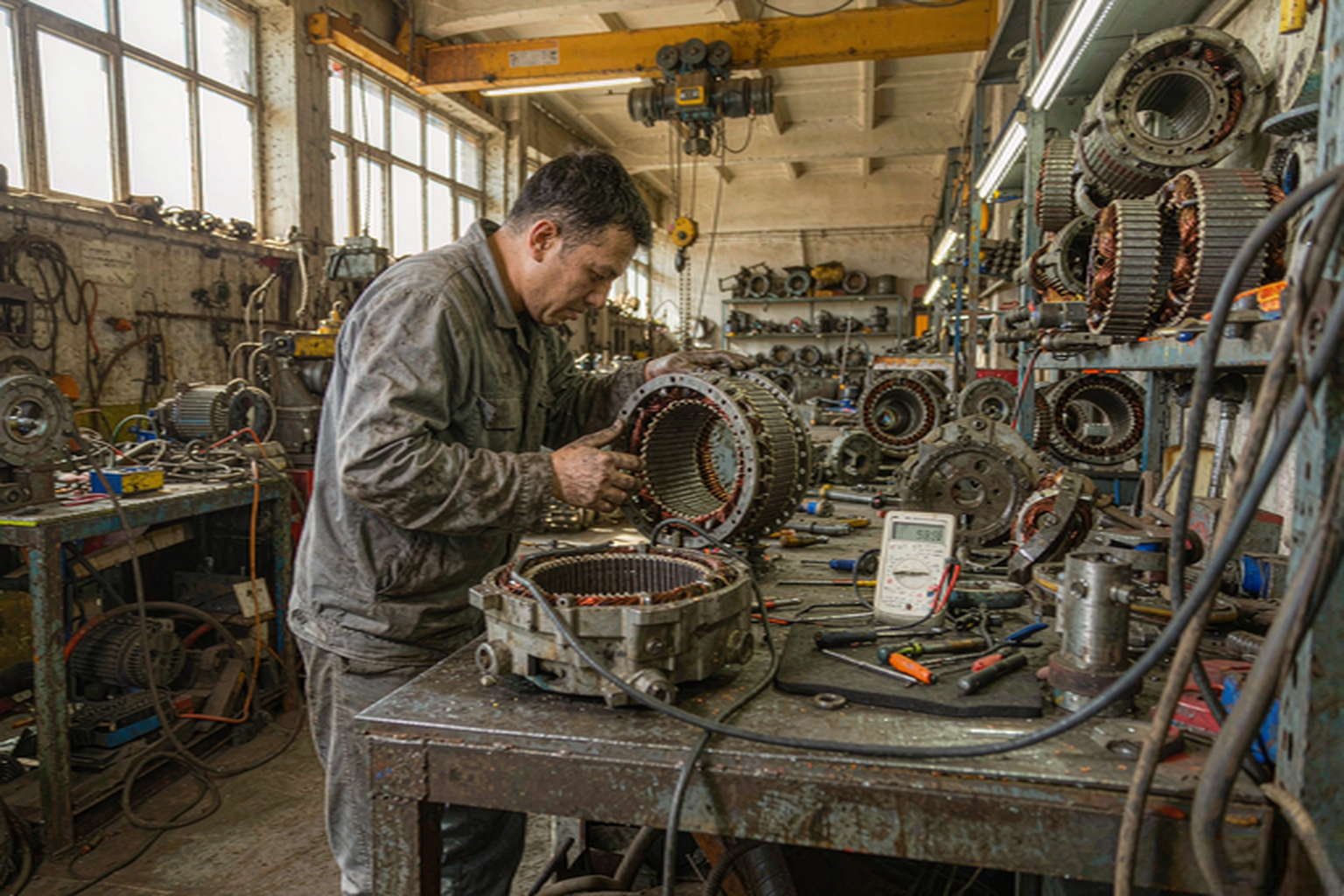
When a working motor burns out, the first question from maintenance is almost always the same: rewind it or replace it? A rewind can look dramatically cheaper on the invoice, and for a large motor the savings can be substantial. But the purchase price is only the beginning of the story. A decision based purely on the repair quote can lock a plant into years of higher energy costs, repeat failures, and hidden downtime. This article sets out a practical lifecycle framework for making the call.
Why the Rewind vs Replace Decision Matters
Electric motors consume a large share of industrial electricity, and in many plants motor-driven systems account for more than half of total electrical demand. A motor that is twenty years old is not just old in calendar terms; it embodies an older generation of efficiency, insulation, and bearing design. Keeping it running may feel like saving money, but the energy it wastes compared with a modern IE3 or IE4 machine can exceed the cost of a new motor within a few years.
There is also the question of reliability. A rewound motor is only as good as the rewind: poor stripping, inferior insulation, and imprecise winding can leave a motor that fails again quickly. Each failure carries not just the repair cost but the disruption of an unplanned stoppage, which in a continuous process can dwarf the price of the motor itself.
Start With the Condition of the Motor
The first step is an honest assessment of the machine. Not every motor is a good rewind candidate. A competent repair shop can run a series of checks that reveal whether the core and frame are worth keeping.
Inspect the stator core for damage from the burnout. If the winding overheated severely, the electrical steel can be damaged, and core losses rise. A core that has been ground or burned during stripping will run hotter and less efficiently no matter how good the new winding is. An ELCID (electromagnetic core imperfection detection) test can quantify core condition before you commit to a rewind.
Check the frame, end shields, shaft, and bearing fits for wear or misalignment. A cracked frame or a shaft that has been welded and straightened is a strong signal to replace. Also look at the environment: if the motor has been repeatedly exposed to moisture, chemical attack, or abrasion, the underlying cause should be addressed regardless of whether you rewind or replace.
Compare Efficiency, Not Just Price
Efficiency is where the economics usually turn. Older motors, particularly those built before the widespread adoption of premium efficiency standards, can be several percentage points less efficient than a current IE3 or IE4 machine. That difference may sound small, but on a motor that runs thousands of hours a year it adds up quickly.
Consider a 30 kW motor running 6,000 hours a year at 80 percent load. Improving efficiency by three percentage points saves roughly 430 kWh per year at that load. Over ten years, at a typical industrial tariff, that is a meaningful sum — often comparable to a significant share of the motor’s purchase price. When electricity prices are high or the motor runs continuously, the payback on a premium efficiency replacement can be surprisingly short.
Be cautious with efficiency claims for rewound motors. A rewind can preserve the original efficiency if done well, but it rarely improves it. If the original machine was already inefficient, a rewind simply locks in that inefficiency for another decade. This is the moment to ask whether a modern motor would pay for itself in energy savings alone.
Factor in Power Factor and System Effects
Older motors often have a lower power factor, which means they draw more current for the same mechanical output. That increases losses in cabling, transformers, and switchgear, and it may push the facility into a poor power factor penalty from the utility. A replacement motor with a higher power factor improves the whole electrical system, not just the machine itself.
Replacing a single motor can also reveal opportunities elsewhere. If the driven load is a pump or fan, pairing the new high-efficiency motor with a variable frequency drive can deliver savings far beyond the motor’s own efficiency gain, because it matches speed to demand rather than throttling flow. When a motor has failed and the production line is already stopped, it is often the cheapest time to make these system-level changes.
Count the True Cost of Downtime
A rewind typically takes longer than swapping in a new motor from stock, especially if the repair shop is busy or the motor needs to be shipped. That extra time is not free. In a process plant, an unplanned day of downtime can cost many times the price difference between a rewind and a replacement.
For critical motors, many plants now keep a spare on the shelf or maintain a loaner agreement with a local supplier. If a spare is available, replacement becomes the fast, low-risk option and the rewind decision changes completely. For non-critical motors with flexible scheduling, a rewind may be perfectly reasonable, provided the core and frame are sound and the repair shop is reputable.
When a Rewind Makes Sense
Rewinding is still the right choice in several situations. Large, specialized, or slow-speed motors can be extremely expensive to replace, and a high-quality rewind by a certified shop can restore them to near-original condition. Motors with a sound core, good frame, and a documented history of reliable operation are also good candidates. If the motor runs only intermittently, the energy penalty of an older design is small and the capital cost of replacement is harder to justify.
When you do rewind, specify the process as carefully as you would a new purchase. Ask about insulation class, varnish type, winding technique, and whether the shop will perform a surge test and a core loss test. Request a written warranty. A cheap rewind that fails in eighteen months is the most expensive option of all.
When Replacement Is the Better Investment
Replacement wins when the motor is old and inefficient, when the core is damaged, when downtime is costly, or when a system upgrade is already on the table. It also wins when you can capture the efficiency gap in a short payback period. Before deciding, calculate the simple payback: divide the extra cost of the new motor by annual energy savings. If the result is two to four years, replacement is the smarter financial move.
A Practical Decision Checklist
Start with the core condition and frame. If they are compromised, replace. If they are sound, compare the efficiency of the rewound machine against a new IE3 or IE4 alternative using realistic running hours and your actual electricity tariff. Add the cost of downtime and the value of any power factor or drive-related improvements. If a replacement pays back within a few years, take it. If not, rewind it properly and document the work.
To explore high-efficiency IE3, IE4, and IE5 motors and to model the potential energy savings for your plant, visit https://motorolltech.com. Our team can help you compare a replacement against a rewind for your specific motor and duty cycle.