
Blog
Washdown Motors for Food and Beverage Plants: Hygiene, IP Ratings and Reliability

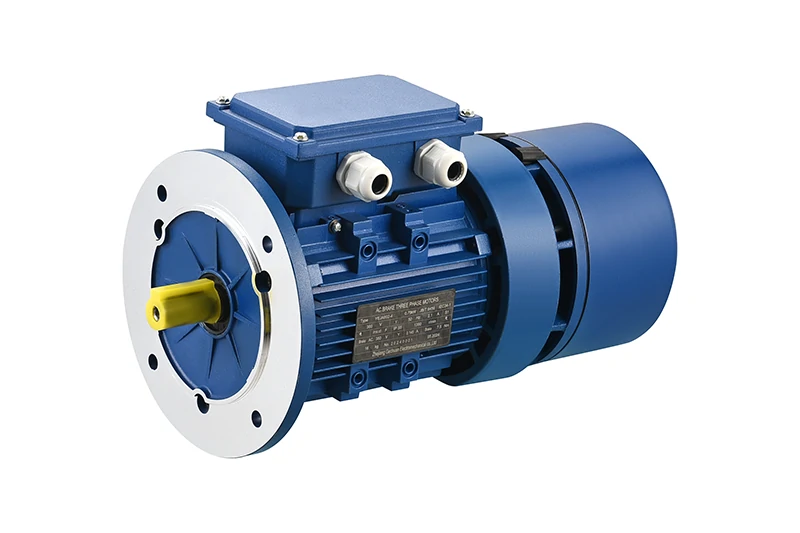
In a food or beverage plant, the equipment that fails most often is rarely the one that runs the hardest. It is the electric motor that gets washed down every shift. Conveyor drives, mixers, pumps, and packaging machines in processing areas are routinely hosed with high-pressure water, caustic cleaners, and sanitising foams to meet hygiene requirements. A standard industrial motor, however well sealed, will eventually ingest that water and cleaning chemical through its seals and breathers, leading to insulation breakdown, bearing corrosion, and premature failure. This is why food and beverage facilities specify washdown motors — and why choosing the right one has a direct impact on uptime and food safety.
What Makes a Motor a “Washdown” Motor?
A washdown motor is designed from the ground up to withstand repeated exposure to water and aggressive cleaning agents. It is not simply a standard motor with extra paint. The differences begin at the enclosure. Washdown motors typically use stainless steel or specially coated cast-iron frames, shafts, and fasteners that resist corrosion from salt, acids, and caustic solutions. Seals are upgraded at every penetration — the shaft extension, the conduit box, and the end bells — to keep moisture out. External surfaces are smooth and sloped so that water drains away rather than pooling, because standing water is where bacteria thrive and where corrosion starts.
Cable entry is another critical detail. A proper washdown motor uses sealed, liquid-tight fittings and a gasketed terminal box, often with the box positioned or oriented so that water cannot collect around the cable gland. Breather drains, common on standard motors, are either eliminated or replaced with sealed pressure-equalisation devices that allow the motor to breathe without letting water in.
Understanding IP Ratings for Washdown Duty
The Ingress Protection (IP) rating is the first specification to check. It is expressed as two digits: the first for solid particles, the second for water. For washdown duty, the second digit is the one that matters. IP65 means protection against low-pressure water jets from any direction — adequate for a gentle hose-down. IP66 means protection against powerful water jets, which is what most plants actually use. IP69K goes further, rating the enclosure against high-pressure, high-temperature steam cleaning up to roughly 80 °C and 100 bar, the kind of washdown used in hygienic processing areas.
For a food plant that uses high-pressure hot-water cleaning, IP66 should be treated as a minimum, and IP69K is increasingly specified for zones that are cleaned most aggressively. It is important to match the rating to the real cleaning process: a plant that claims IP65 is sufficient but directs an 80 °C jet at the motor from close range will be replacing motors on a predictable schedule. Always ask the cleaning crew how the area is actually washed, not just what the hygiene manual says.
Corrosion Resistance and Materials
Water is only half the challenge. The cleaning chemicals used in food plants — chlorine-based sanitisers, peracetic acid, caustic soda, and acidic descalers — are highly aggressive to ordinary materials. That is why washdown motors favour stainless steel shafts and hardware, and why frames are often coated with food-grade, chemical-resistant paint. Where the environment is especially harsh, such as a brine or pickle line, a full stainless-steel motor may be justified despite the higher cost.
Bearings deserve special attention too. Moisture that gets past a seal contaminates the grease and causes rust on the bearing races. Look for motors with sealed, permanently lubricated bearings and effective labyrinth seals at the drive end. In high-humidity environments, the difference between a well-sealed bearing and a standard one can be years of additional life.
Efficiency, Duty Cycle, and Motor Control
Hygiene should not come at the expense of efficiency. Modern washdown motors are available in high-efficiency designs that meet IE3 or IE4 levels, so plants can satisfy both food-safety and energy goals. This matters because food plants run many motors for long hours, and conveyor and pump loads are often good candidates for variable-speed control. Pairing a high-efficiency washdown motor with a variable frequency drive can cut energy use significantly on variable-torque applications, while soft starting reduces mechanical shock to gearboxes and conveyors.
When selecting a motor for washdown duty, consider the following:
- IP rating: IP66 minimum for high-pressure washdown; IP69K for hot, high-pressure cleaning zones.
- Frame and shaft material: Stainless steel or chemical-resistant coating, with stainless hardware.
- Sealing: Sealed terminal box, liquid-tight cable glands, and quality shaft seals.
- Efficiency class: IE3 or IE4 to reduce long-run energy cost.
- Bearings: Sealed, permanently lubricated type with good moisture protection.
- Drive compatibility: Suitability for VFD operation if speed control is required.
Installation and Maintenance Practices That Extend Life
Even the best washdown motor will fail early if it is installed poorly. Point cable entries downward or sideways so water cannot run into the gland. Use flexible, liquid-tight conduit and leave a drip loop in the cable. Avoid mounting the motor where it sits in standing water, and check that the drain holes, if any, remain clear. It is also good practice to shield motors from the most direct jet during manual cleaning where possible, even on an IP69K machine — no seal lasts forever under repeated direct blasting.
On the maintenance side, inspect seals and cable glands regularly, and replace them at the first sign of cracking or hardening. Because washdown motors have no oil to change and sealed bearings, maintenance is light, but visual inspection after each wash cycle can catch a damaged gland before it becomes a failed motor. Keeping a spare of the most critical motor on hand is also wise, since a single conveyor drive can stop an entire line.
Protecting Both Product and Productivity
A failed motor in a processing area is more than a maintenance event. It can interrupt production, create a food-safety concern if a damaged seal or lubricant leaks near product, and cost far more than the price difference between a standard and a washdown motor. Specifying the correct IP rating, corrosion-resistant construction, and high-efficiency design up front pays back through longer life, fewer unplanned stops, and easier sanitation compliance.
If you are selecting motors for a food or beverage line — or repeatedly replacing drives that fail after washdown — talk to the team at https://motorolltech.com. We can help you choose washdown motors with the right IP rating, materials, and efficiency for your cleaning regime and duty cycle.