
Blog
Synchronous Reluctance vs Permanent Magnet: Choosing the Right IE5 Motor

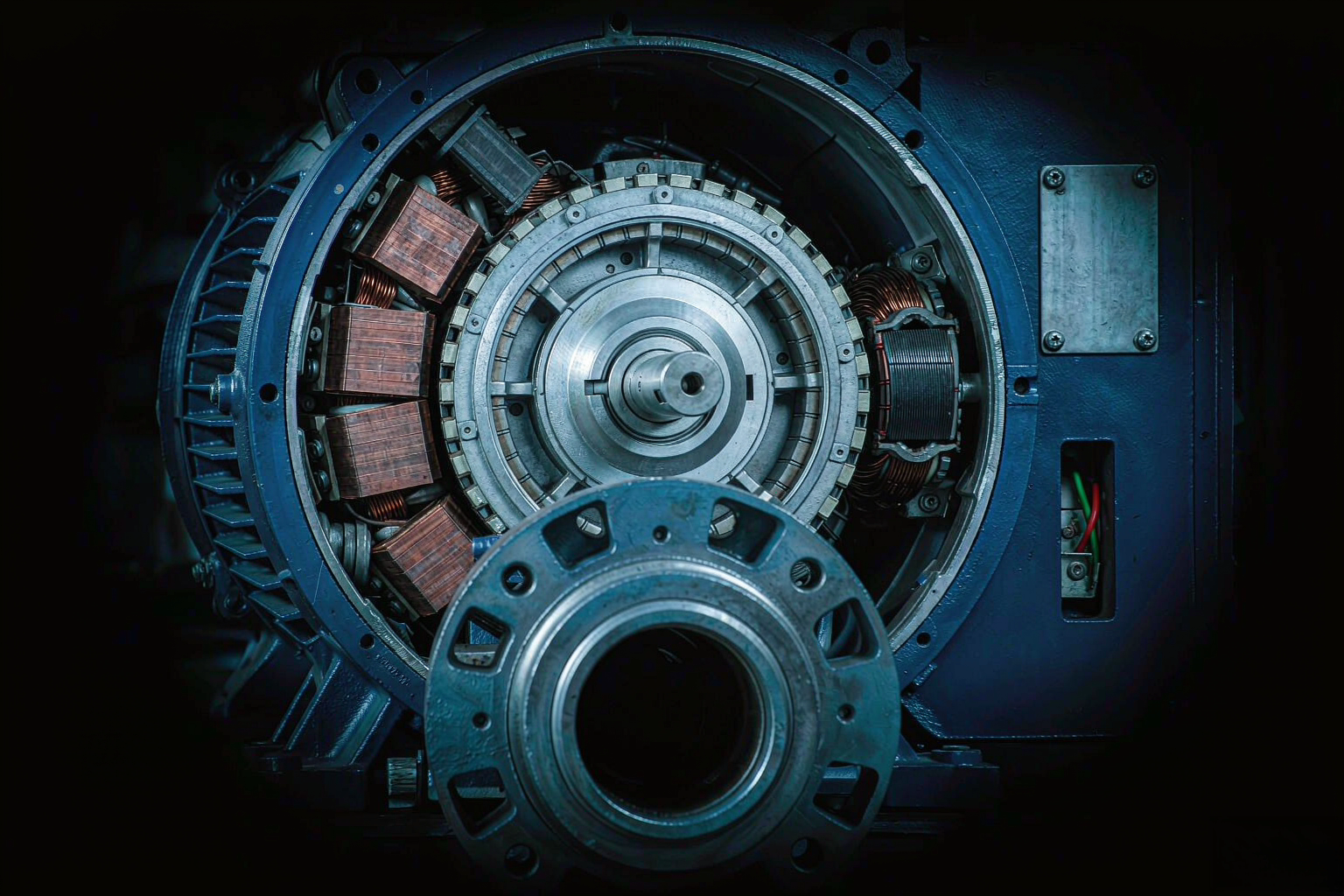
Two Paths to the IE5 Efficiency Ceiling
When the IE5 efficiency class became the target for new drive projects, most engineers assumed the answer was a permanent-magnet (PM) motor. It remains the most familiar route to the top of the IEC efficiency table. But synchronous reluctance (SynRM) motors have matured into a genuine alternative that reaches IE5 without rare-earth magnets—and that distinction carries real consequences for cost, supply chain, and operating safety. Choosing between them is no longer a foregone conclusion.
How Each Technology Works
A permanent-magnet synchronous motor embeds magnets in the rotor. The magnetic field is always present, so the motor runs with high power factor and excellent efficiency across a wide speed range. The downside is the magnets themselves: they add cost, they are sensitive to high temperature (demagnetization risk), and they depend on magnet supply chains that have historically been volatile.
A synchronous reluctance motor uses a specially shaped rotor with flux barriers but no magnets. Torque is produced by the natural tendency of the rotor to align with the rotating stator field. Without magnets it cannot demagnetize, runs cooler in the rotor, and is intrinsically robust. Modern SynRM designs reach IE5 by minimizing rotor losses through carefully engineered barrier geometry.
Efficiency and Load Behavior
Both technologies deliver outstanding efficiency, and in many duty cycles the difference at the shaft is small. PM motors typically hold a slight edge at very light loads and at very low speed, where SynRM reluctance torque is harder to sustain. SynRM, by contrast, often wins on partial-load efficiency in the mid-range where most industrial fans, pumps, and compressors actually operate, and it does so without magnet losses.
For variable-speed applications driven by a VFD, the inverter’s field-oriented control is what unlocks either motor’s potential. Both require a capable drive with the correct motor model loaded; the days of “any inverter will do” are over for IE5-class machines.
Safety, Supply Chain, and Total Cost
SynRM’s magnet-free rotor removes a failure mode that matters in some industries: if a PM motor overheats or is driven incorrectly, magnet demagnetization is permanent and expensive. SynRM simply cannot demagnetize. It is also inherently explosion-persistent in design philosophy and avoids the price and availability swings of rare-earth materials.
On total cost of ownership, SynRM often closes the gap with PM because the bill of materials is simpler and the rotor is more tolerant of abuse. PM may still be preferred where the absolute highest torque density in a compact frame is needed, or where the application spends most of its life at very low speed and light load.
Application Examples: Where Each Wins
Consider a water-treatment plant with large variable-speed pumps running continuously at moderate load. SynRM is a strong fit: no magnet risk in a damp environment, excellent partial-load efficiency, and a simpler bill of materials. Contrast that with a packaging line performing rapid start-stop and precise tension control, where the PM motor’s superior low-speed torque and dynamic response often justify its premium. Neither technology is universally superior; the right answer follows the torque-speed profile, the ambient, and the cost of a failure. Treating the choice as application engineering rather than a catalog default is what yields the lowest lifecycle cost.
Protection and Monitoring for IE5 Drives
High-efficiency machines justify better protection. Integrated thermal sensors, vibration monitoring, and drive-level current signature analysis catch developing faults—bearing wear, cooling loss, imbalance—before they become outages. Because IE5 motors are often specified for critical duties, pairing them with this monitoring is good practice rather than optional luxury. The data also feeds predictive-maintenance programs that extend asset life and keep the machine running inside its designed efficiency envelope.
Matching the Drive to the Application
The decision should follow the load. For centrifugal fans and pumps with a square-law torque curve and long run hours at partial load, SynRM is frequently the smarter, lower-risk choice. For high-dynamic positioning, hoists, or constant low-speed tensioning, PM’s torque characteristics may justify its premium. Either way, specify the VFD and motor as a matched set and commission the control parameters rather than leaving defaults.
Conclusion
IE5 no longer means “permanent magnet by default.” Synchronous reluctance motors give plant engineers a magnet-free, robust, and often lower-risk route to the same efficiency class—expanding the toolbox for sustainable, resilient drive design.
What About the Cost of the Magnets Themselves?
The rare-earth question is not only about price; it is about predictability. Magnet costs have swung dramatically with supply and trade policy, making PM projects hard to budget years in advance. SynRM’s magnet-free design insulates the capital cost from those swings, which can matter for multi-site rollouts planned over several budget cycles. For asset managers standardizing a fleet of drives, that stability is a strategic advantage beyond the per-unit efficiency number on the nameplate.
Compare IE5 drive options and find the right synchronous motor for your application at motorolltech.com.