
Blog
Motor Selection for High-Altitude and High-Temperature Plants: Derating Rules That Prevent Downtime

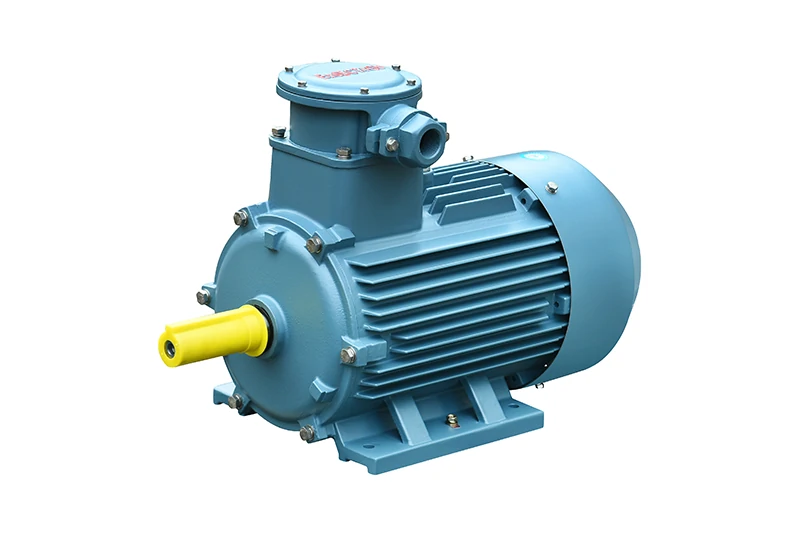
When the Nameplate Lies About Your Site
A motor’s rated output assumes a specific set of ambient conditions: usually 40 °C maximum ambient, up to 1000 meters above sea level, and clean, cool intake air. Move that motor to a mine at 3,500 meters, a desert plant where ambient routinely hits 50 °C, or a boiler-room installation with restricted airflow, and the same nameplate suddenly promises more than the machine can safely deliver. Derating is not a footnote—it is the difference between a ten-year reliable asset and a summer of nuisance trips.
Altitude: Thin Air Cools Less
As altitude rises, air density falls. A motor relies on that air to carry heat away from its frame and windings. At 2,000 meters the cooling air is roughly 20% less dense than at sea level, so convective cooling drops even though the ambient temperature may feel comfortable. Manufacturers publish altitude-derating curves: a typical rule of thumb is a small percentage of capacity lost per 1,000 meters above 1,000 m, with more aggressive falloff at extreme heights.
The fix is rarely “buy a bigger motor” alone. Forced ventilation, a higher insulation class, or a motor specifically rated for high altitude keeps the winding hot-spot temperature inside its limit. In some high-altitude mining applications, pressurizing the motor enclosure or relocating the air intake to a cooler, denser source is the pragmatic solution.
From a selection standpoint, treat altitude as a hard multiplier on required frame size. A motor that is exactly adequate at sea level may need to step up one or two frames at extreme elevation just to keep the winding inside its temperature class. Planning this at the specification stage avoids the costly field replacement that follows a summer overload.
Ambient Temperature: The Other Half of the Limit
Every insulation class (e.g., class F or H) defines how much temperature rise above ambient the winding can tolerate before aging accelerates. In a foundry, glass plant, or tropical outdoor substation, the ambient itself may already be near the motor’s 40 °C assumption. Add the internal temperature rise and you are quickly above the safe hot-spot limit unless you derate.
Practical measures include specifying a higher insulation class, improving local airflow with ducted cooling, shading the motor from radiant heat, and—critically—verifying that the VFD’s output and the motor’s thermal protection are configured for the real site, not the catalog default.
Cooling Method and IC Codes
The cooling method, expressed as an IC code, decides how robust the motor is to hostile surroundings. A self-ventilated (IC 411) motor pulls in local air; if that air is hot, dusty, or thin, performance suffers immediately. A separately ventilated (IC 416) or closed-circuit air-to-air cooled (IC 616) motor can draw cooling air from a controlled source, decoupling the motor from a hostile local environment. For extreme sites, liquid-cooled (IC 81W) designs move the heat rejection far from the motor.
Choosing the cooling method is therefore a site-conditions decision first and a cost decision second. A cheaper open motor that trips every August is more expensive than a properly cooled unit that simply runs.
Dust, Humidity, and the Enclosure Decision
Extreme sites usually bring companions: fine dust at altitude, salt-laden coastal air, or high humidity in tropical plants. These argue for enclosed, separately cooled motors rather than open designs that breathe the local atmosphere. A closed-circuit cooled motor keeps the windings insulated from the hostile intake, and the external cooler can be sited where air is cleaner and cooler. Pairing the right enclosure with the right cooling method is what turns a hostile environment from a reliability threat into a manageable design parameter.
For coastal or offshore sites, specify corrosion-resistant materials and tropicalized windings alongside the cooling upgrade. Salt fog attacks terminations and frame coatings long before the motor’s thermal limit is reached, so the enclosure and protective treatment deserve the same attention as the cooling method when the environment is unforgiving.
Putting Derating Into Practice
The workflow is simple but too often skipped: take the site’s worst-case altitude and ambient, read the manufacturer’s combined derating curve, and select the motor so that its derated output still covers the driven load with margin. Document the assumption so the next engineer does not “upgrade” the load and silently exceed the limit. Where redundancy matters, oversizing by one frame and running cooler also extends bearing and winding life.
For sites planning future capacity increases, derate with headroom rather than to the exact current load. A motor selected at 90% of its site-derated rating leaves room for a modest process expansion without re-specifying the drivetrain—a cheap insurance against the next production target.
Conclusion
High-altitude and high-temperature plants demand that derating rules be applied deliberately, not as an afterthought. Matching insulation class, cooling method, and frame size to the real environment is what converts a specification into years of uninterrupted operation.
Get application-specific motor selection guidance for demanding sites at motorolltech.com.