
Blog
Motor Cooling Methods Explained: Choosing Between IC01, IC411, IC416 and IC666

Why Cooling Method Decides Motor Reliability
A motor’s insulation and bearings may be rated for a long life, but none of that matters if heat is not removed fast enough. Cooling is not an accessory — it is central to how much power a given frame can safely deliver. The international IC code (cooling arrangement per IEC 60034-6) tells you exactly how a machine moves heat, and choosing the wrong code for the duty and environment is one of the most common causes of premature motor failure.
Decoding the IC Code
The IC code starts with “IC” followed by letters and digits describing the cooling circuit. The most common patterns are IC01, IC411, and IC416. The first digit after IC indicates the cooling medium circuit: 0 = free convection (natural), 4 = force-cooled with an integral fan or blower, 6 = separate motor-driven blower. The following digits describe how the medium moves: 1 = self-circulation, 4 = through a surrounding medium (usually air), 6 = from an external source. In plain terms: IC01 is natural convection, IC411 is the classic self-ventilated TEFC motor, and IC416 is a separately blown machine whose cooling continues even at standstill or low speed.
IC411: The Workhorse Self-Ventilated Motor
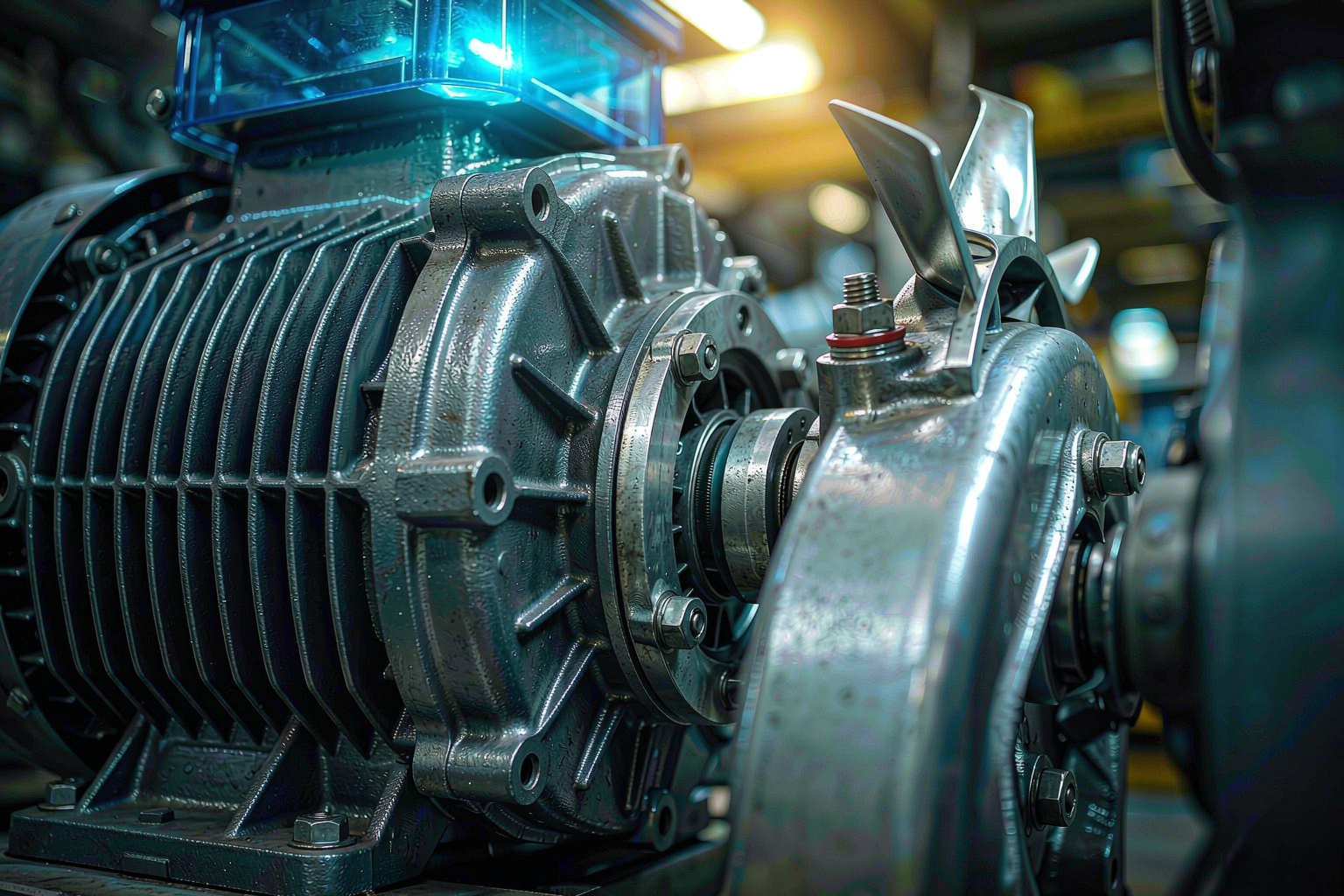
IC411 is the default for most general-duty TEFC (totally enclosed fan-cooled) motors. An external fan on the shaft draws ambient air across fins on the frame, removing heat regardless of the process gas inside. It is simple, cheap, and effective — but only when the shaft is turning. At low speed or during holding torque (common with VFDs), the shaft-mounted fan slows too, and cooling collapses exactly when the motor may be heating most. For variable-speed duties, IC411 alone is a risk.
IC416: Forced Cooling That Does Not Depend on Speed
IC416 adds a separate blower powered independently of the main shaft. Because the blower runs from its own supply (often controlled by the drive), cooling stays constant from zero to full speed. This makes IC416 the right choice for fan and pump applications with wide speed ranges, for holding-duty positioning, and for any VFD application where the motor spends time at low rpm under load. The trade-off is higher cost, extra wiring, and one more component to maintain.
IC01: Natural Convection for Light Duties
IC01 relies on radiation and natural air movement with no fan. It suits small, lightly loaded, or intermittently operated motors in clean, ventilated spaces where forced cooling is unnecessary. It is silent and has no fan to fail, but its power density is low, so it is rarely the answer for industrial continuous duty.
Matching Cooling to Environment
In dusty or fibrous environments, the external fin fan of an IC411 unit can clog, so some plants prefer blower-ventilated or air-to-air heat-exchanger (IC666) designs that keep process air isolated. In washdown or corrosive areas, sealed enclosures with external fins protect the windings. In high-altitude or high-ambient sites, derate the motor or step up the cooling class, because thin or hot air removes less heat per volume.
IC666 and Closed-Loop Cooling
For the harshest environments, the IC code family offers IC666: an air-to-air or air-to-water heat exchanger where the motor’s internal circuit is closed and isolated from the dirty external air. An internal fan circulates clean air over the windings, while an external fan blows the process atmosphere across the exchanger surface. This keeps abrasive dust, moisture, and corrosive fumes away from the electrical parts entirely, at the cost of more complexity and a slightly larger frame. In cement, mining, and marine applications, IC666 is often the only way to reach a reasonable service interval.
A Practical Sizing Example
Consider a centrifugal fan driven by a 55 kW motor on a VFD that runs from 20% to 100% speed. At low speed the shaft fan of an IC411 unit would deliver almost no cooling while the motor may still carry significant torque — a clear case for IC416 with a blower. If the same motor instead ran at a fixed 100% speed in a clean pump house, IC411 would be perfectly adequate and cheaper. The decision therefore follows the duty profile, not the nameplate power: match the cooling class to how the motor actually spends its operating hours.
Practical Selection Rules
Start from the duty cycle. Fixed-speed, clean-environment, continuous duty → IC411 is usually perfect. Variable-speed with low-speed loaded operation, holding torque, or frequent reversing → specify IC416. Small, light, intermittent duty in a cool room → IC01 may suffice. Always confirm the cooling requirement with the drive supplier when using a VFD, and remember that forced cooling often allows a smaller frame to deliver the same output.
Maintenance Implications
Each cooling class has its own weak point. IC411 fails when the fan cover is blocked or the fan blade breaks; IC416 adds a blower motor and its own airflow path to the maintenance plan; IC01 needs clear surrounding space and good ambient flow. A quarterly visual check of airflow paths prevents most heat-related failures.
Conclusion
The IC code is a compact but powerful guide to motor cooling. IC411 serves most fixed-speed duties, IC416 protects variable-speed and low-rpm applications, and IC01 fits light intermittent loads. Matching the cooling method to the duty and environment is one of the highest-leverage decisions in motor selection. Our engineering team can help you read the IC code against your real operating profile and specify a motor that runs cool for its whole life. Explore the options at https://motorolltech.com.