
Blog
How to Select the Right Industrial Motor for Dusty and Harsh Environments

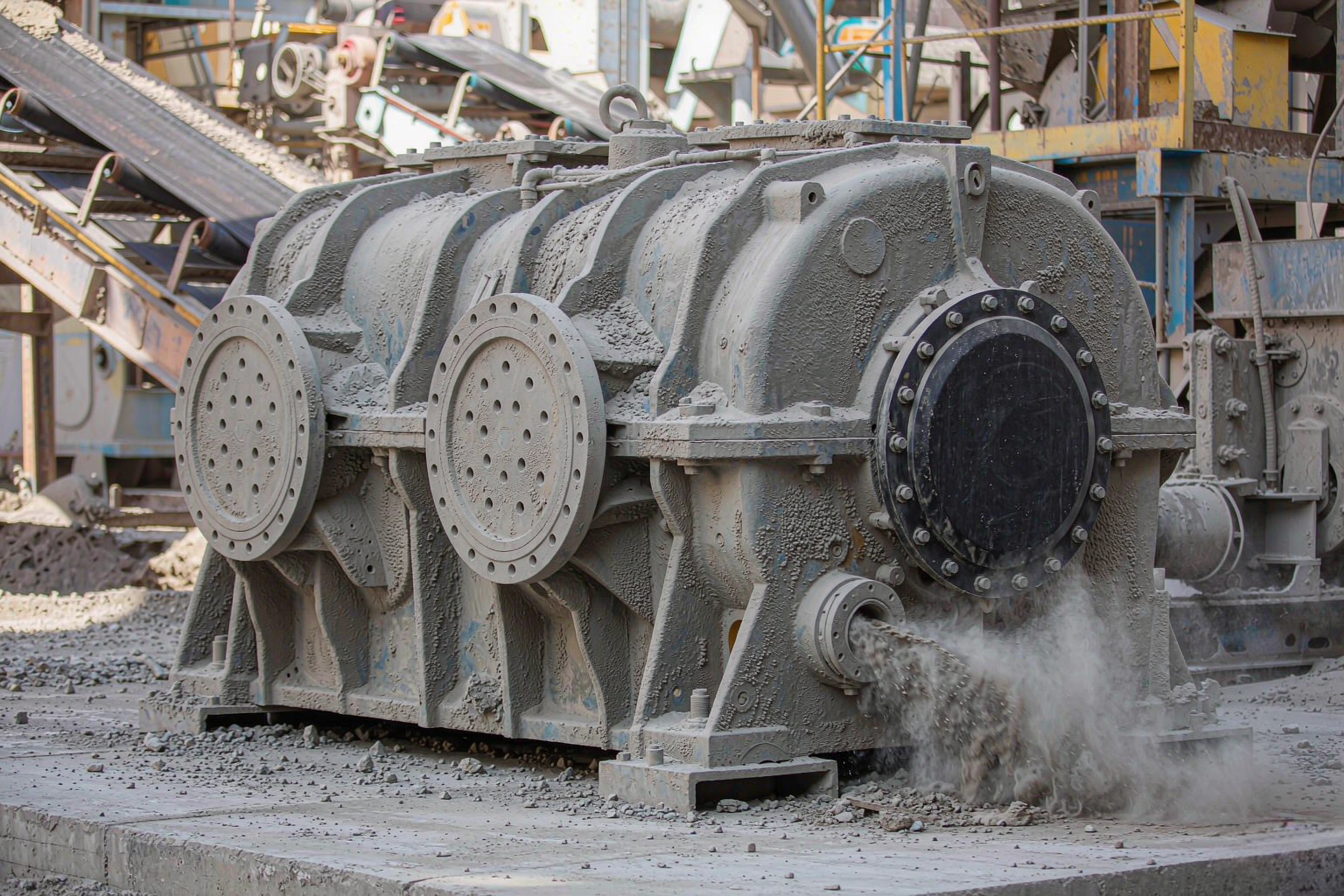
How to Select the Right Industrial Motor for Dusty and Harsh Environments
Mining sites, cement plants, steel mills, and mineral processing facilities share a common enemy: the environment itself. High dust concentration, elevated temperatures, moisture, corrosive gases, and constant vibration put motors under stress that a clean indoor factory would never see. Choosing the wrong machine for these conditions leads to overheating, frequent failures, and costly unplanned downtime.
This guide walks through the practical decisions plant engineers and procurement teams should make when specifying motors for harsh duty.
Start With the Protection Rating (IP Code)
The Ingress Protection (IP) rating is the first line of defense. It tells you how well the enclosure keeps solids and liquids out.
- IP23 enclosures only protect against objects larger than 12 mm and some dust. They belong in clean indoor spaces only — never in a processing plant.
- IP54 keeps harmful dust from accumulating inside and resists splashing water. It suits most indoor industrial areas.
- IP55 and above block the majority of dust even in dusty regions, and are the minimum recommended for cement, coal, and mineral processing.
- IP65+ is appropriate for outdoor or washdown environments where spray or temporary immersion is possible.
Upgrading an enclosure after purchase is expensive, so the rating should be chosen for the worst realistic condition, not the average one.
Air Cooling vs. Water Cooling in Dusty Sites
Most standard motors are air-cooled: they pull outside air across fins or through ducts to carry heat away. In a clean, well-ventilated room that works well. But in a cement mill or ore crusher, that same airflow drags in dust that coats internal surfaces, blocks cooling passages, and drives winding temperatures up.
Water-cooled motors solve this by sealing the cooling circuit. Heat is transferred through internal tubes to an external heat exchanger, so outside air never touches the windings or bearings. For drives above roughly 500 kW running continuously, the extra plumbing is usually worth the reliability gain.
Key advantages of water cooling in harsh sites:
- Stable winding temperatures regardless of ambient dust or heat.
- Fewer thermal trips and longer insulation life.
- Lower noise — often 8 to 15 dB quieter than equivalent fan-cooled units.
- No airborne contaminants reaching internal components.
The trade-off is a cooling circuit (pump, piping, heat exchanger) that needs water-quality management and freeze protection in cold climates.
Matching the Series to the Application
Different heavy industries place different demands on starting torque, overload capacity, and duty type. Common practice:
- Mining: high starting torque and heavy-duty slip-ring designs for ball mills, SAG mills, hoists, and conveyors under shock loading.
- Cement: slip-ring motors for kilns and mills with heavy starting loads; efficient motors for bucket elevators and fans.
- Steel: motors rated for high temperature, heavy vibration, and continuous schedules.
- Power generation: high-reliability units with online temperature and vibration monitoring for boiler feed and circulating pumps.
- Oil & gas: certified explosion-proof motors with corrosion-resistant coatings and sealed systems.
Insulation, Bearings, and Sealing Details
Beyond the enclosure, three details separate a motor that survives from one that fails early:
- Insulation class: Class F or H insulation resists the higher temperatures found in hot, dusty plants.
- Bearings: sealed, long-grease packs from reputable brands reduce the need for frequent lubrication — important when the motor sits high on a hoist structure and is hard to reach.
- Seals: labyrinth shaft seals and durable gaskets prevent particles from entering at the shaft, terminals, and mounting faces. Inspect and replace worn seals during planned maintenance.
A Simple Selection Workflow
To avoid costly mistakes, follow a structured path: determine load type and torque → calculate required power → confirm voltage → choose starting method → select cooling system → set protection rating → specify insulation class → review ambient conditions → finalize the procurement specification with drawings.
Bottom Line
In harsh environments, motor selection is an engineering decision, not a catalog pick. Get the IP rating, cooling method, and mechanical protection right, and a motor will run for years with minimal intervention. Get them wrong, and you will pay for it in emergency repairs and lost production.
MotorollTech supplies high-voltage and low-voltage industrial motors — including IP55 water-cooled and explosion-proof designs — built for mining, cement, metallurgy, power, and petrochemical duty. Contact our engineering team for application-specific motor selection support.